How to Plant and Care for Norfolk Island Pine
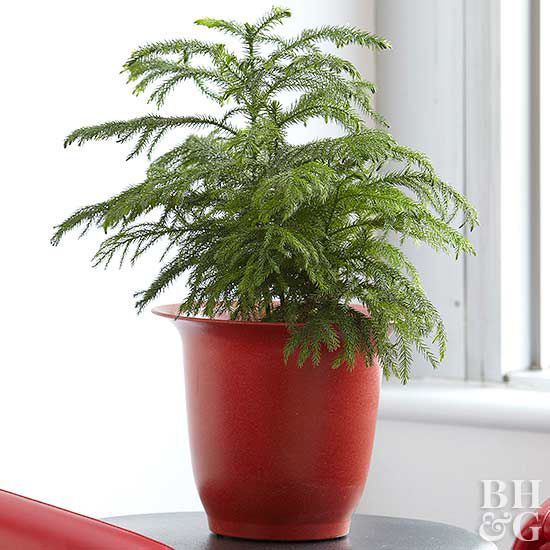
The petite plant that has put Norfolk Island, a tiny Australian island in the South Pacific Ocean, on the map for houseplant lovers is Norfolk Island pine. It is a pretty miniature Christmas tree with tiered branches of saber-like leaves arranged in a dense herringbone pattern. This dwarf tree is botanically not a pine but a tropical pine-like conifer that grows up to 80 feet tall in the wild.
Unlike other holiday plants, after Norfolk Island pine has served its purpose as a Christmas tree, it continues to provide a bold burst of greenery in your home year-round. Norfolk Island pines are slow-growing so they are unlikely to outgrow their dedicated indoor space.
Norfolk Island Pine Overview
| Genus Name | Araucaria heterophylla |
| Common Name | Norfolk Island Pine |
| Plant Type | Houseplant |
| Light | Part Sun, Sun |
| Height | 3 to 6 feet |
| Width | 1 to 3 feet |
Where to Plant Norfolk Island Pine
Place potted Norfolk Island pines near a bright window, preferably east-, west- or south-facing so it gets the maximum amount of bright, direct light. Good locations off the ground are tabletops, mantels, and desks.
During the winter, when indoor air is notoriously dry, rooms with higher humidity levels (kitchen and bathrooms) are better. If you have forced-air heating, don’t place the plant near the vents.
Norfolk Island Pine Care Tips
Norfolk Island pine makes a low-maintenance houseplant.
Light
Grow Norfolk Island pine in medium to bright light near a west- or south-facing window. The less light Norfolk Island pine receives, the slower it will grow; however, even if you want to curb growth, avoid low-light situations. If it doesn't get enough light, it will be weak, spindly, and unattractive.
To ensure even growth on all sides, rotate the plant weekly.
Soil and Water
Use potting mix combined with a small amount of sand and peat moss.
Norfolk Island pine grows well in soil that is moist but not wet. Water Norfolk Island pine when the soil just begins to feel dry to the touch. Make sure not to overwater the plant—the roots will rot if they are exposed to standing water for an extended period.
Temperature and Humidity
In their native habitat, the tree grows in warm, humid rainforests. Moving your potted plant outdoors during the summer will speed up its growth but keep in mind that it is highly sensitive to cold and does not tolerate temperatures below 60 degrees F. Temperature drops of more than 10 degrees F between day and night are also not conducive to the tree’s health.
High humidity is important for the Norfolk Island pine tree. A relative humidity of 50% is ideal.
Fertilizer
Fertilize Norfolk Island pine with a houseplant fertilizer once or twice in spring and summer, following product label instructions.
Pruning
Over time, the lower branches might die back. But other than removing dead branches or tips, it is not recommended to prune a Norfolk Island pine. Unlike other trees, pruning does not encourage new growth.
Potting and Repotting Norfolk Island Pine
Make sure to use a pot with large drainage holes.
Because it is a slow-growing tree, repotting to a larger pot with fresh potting soil is only required every three to four years. The tree needs repotting when the roots appear above the soil surface.
Pests and Problems
Norfolk Island pine is not bothered by major pests or diseases. It might be affected by common houseplant pests such as mealybugs, scale insects, and thrips.
Brown and crispy branch tips often indicate a lack of water.
Frequently Asked Questions
- Can you propagate a Norfolk Island pine?
It is possible to propagate Norfolk Island Island pine from seeds but the seeds are not commonly available and Norfolk Island pine houseplants do not produce cones. Therefore it is not feasible for home gardeners to propagate a Norfolk Island pine.
- Should I remove the wrap after the holidays?
If your Norfolk Island pine is cloaked in a foil pot wrap, remove the wrap as it tends to trap water, preventing the soil from draining completely. Set the pot in a saucer and water the tree as needed. The saucer will protect the surface below the plant and allow the pot to drain. Dump the excess water from the saucer after watering.
Updated by Nadia Hassani