This Common Planting Mistake Could Kill Your Tree, According to an Arborist
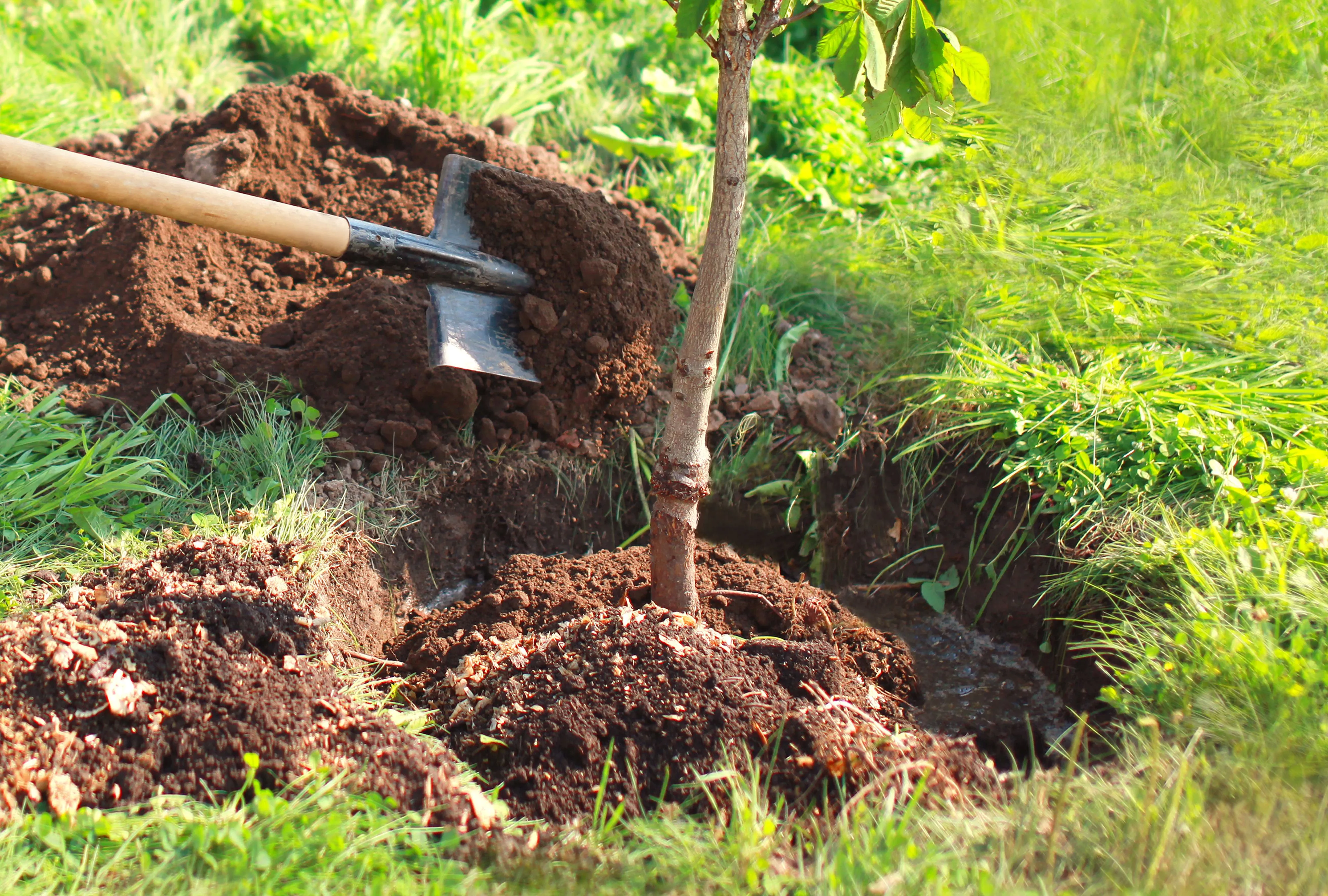
- Locate the root flare, where the trunk widens near the base, and ensure it is slightly above the soil surface when planting.
- Planting trees too deep hinders oxygen access, causing poor rooting, rot, and potential tree death.
- Remove excess soil to expose the root flare and trim fibrous roots if needed.
Could you find the root flare on a tree? Most of us have probably never heard the term, but that particular feature is key to properly planting a tree. A common mistake is to place the root flare too deep in the ground, which will end up making life more difficult or even impossible for the tree.
Here’s what you need to know to plant your tree at the right depth so it thrives for many years to come.
<strong>Ben Vaughan</strong> is an urban forestry project manager for Trees Forever and an International Society of Arboriculture (ISA) certified arborist.
What Is a Tree Root Flare?
Take a close look at the base of a tree trunk, and you’ll notice that it tapers out a bit more than the main trunk. Or at least it should. If you don’t see that flare right above the soil line, the tree you’re looking at was probably planted too deep. That can cause all sorts of problems for the tree, often leading to its untimely demise.
“If you look at virtually any forest tree, or mature/undisturbed urban tree, there is an extremely high likelihood that you’ll be able to see lateral roots coming off of the tree and flaring into the ground,” explains Ben Vaughan, an urban forestry project manager for Trees Forever and an ISA-certified arborist. “This is not a coincidence; trees without exposed flare roots are unlikely to flourish and reach maturity.”
How Deep to Plant a Tree
“Correct root flare height and exposure is probably the most important consideration when planting,” Vaughan says. If planted too deep, the tree won’t root in the soil as well and is more prone to rot. If it’s planted too high, the roots can dry out too much, causing the canopy to die back.
According to Vaughan, planting too high is a much less prevalent problem. “Tree people have a common saying, ‘Too high, won’t die; too low, won’t grow.’ The vast majority of trees, especially shade trees, fall under this rule regardless of species,” he explains.
A key reason why planting trees too deep is such a common problem has to do with how they’re grown in nurseries. Trees in nature usually have an easily visible root flare. “In cultivated trees, this joining point and lateral roots are often completely buried as trees are moved up in container sizes or transplanted,” Vaughn points out. So while a best practice for planting any plant is setting it at the same depth it was at in its container, this will almost always be too deep for trees.
Related
Finding the Right Tree Planting Depth
Next time you’re planting a tree, take the time to locate its root flare, which may require removing the top few inches of soil around the trunk with your fingers or a garden trowel. “When exposing a root flare in a cultivated tree in a 5-15 gallon pot, look for a root as large as one of your fingers,” says Vaughan.
That finger-sized root may be lower down than a few thinner roots coming off the trunk. These fibrous roots are the tree’s attempt to reach more oxygen at the soil surface, and don’t offer any structural support. You can trim them away without hurting the tree.
Vaughan notes that “Some conifers and fruit trees may have a less obvious flare root, in which case simply go by the point where the trunk seems to be widening out/flaring near the base.” And for fruit trees and other commonly grafted trees, Vaughan says not to confuse the flare with the “grafting point, which is typically 6 or so inches above the flare” and can look a little swollen.
Once you’ve found the root flare, plant the tree so that its flare is a little above the soil surface. “Ensure that the joining point [of the finger-sized root] to the trunk is still visible after planting and mulching.” Planting at the correct depth sets your tree on the path to a long, healthy life because its roots can get enough oxygen to grow strong for many years to come.
- <span>Gardening</span>
- <span>Trees, Shrubs & Vines</span>
- <span>Caring for Trees & Shrubs</span>