How to Plant and Grow Anacacho Orchid Tree
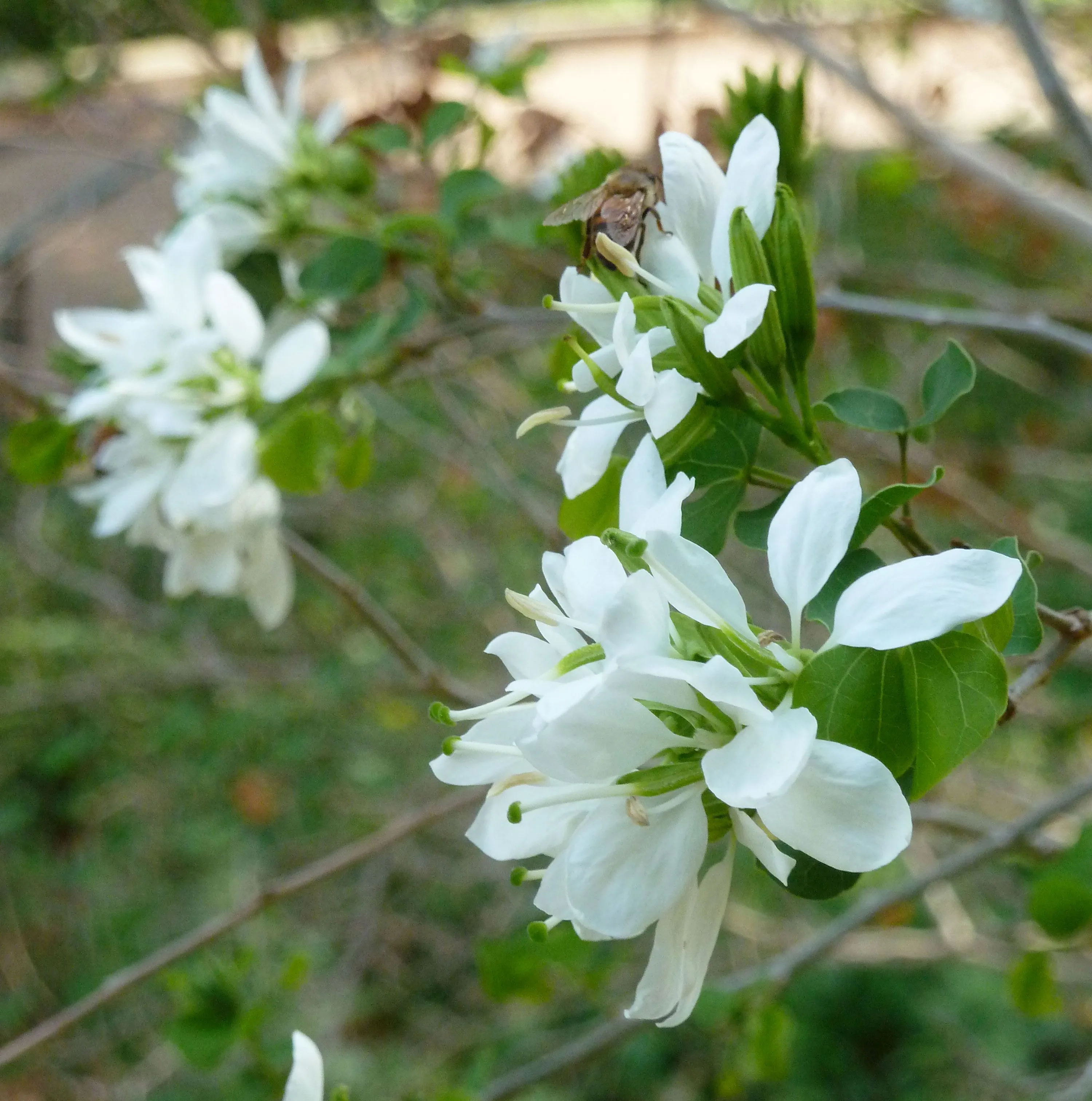
Anacacho orchid is a tree that is native only to a few canyons in western central Texas and in adjacent northeastern Mexico. It is a fairly rare tree or shrub that is sold by specialty nurseries.
Small but mighty, the anacacho orchid tree is an all-star focal point plant for foundation planting areas or for anchoring a garden bed. Count on its silver-gray bark to provide interest in winter while its fragrant, white or pink, orchidlike flowers steal the show in spring. If you don’t have space for a tree in your planting spot, you can choose a shrub version of anacacho orchid.
Anacacho Orchid Tree Overview
| Genus Name | Bauhinia lunarioides, Bauhinia congesta |
| Common Name | Anacacho Orchid Tree |
| Additional Common Names | Texas Plume, Anacacho Bauhinia |
| Plant Type | Shrub, Tree |
| Light | Part Sun, Sun |
| Height | 8 to 12 feet |
| Width | 6 to 10 feet |
| Flower Color | Pink, White |
| Foliage Color | Blue/Green |
| Season Features | Spring Bloom |
| Special Features | Attracts Birds, Fragrance |
| Zones | 10, 11, 9 |
| Propagation | Seed |
| Problem Solvers | Deer Resistant |
Where to Plant Anacacho Orchid Tree
Choose a planting site with full sun where the tree is sheltered from heavy winds. A south-facing location is ideal. The soil should be well-drained and slightly alkaline.
The tree is usually planted as a specimen. Shrub forms of anacacho orchid are equally beautiful and bring the fragrant flowers to eye level.
Pair it with other low-water plants for an easy-care and water-smart landscape. Some colorful perennial companions for anacacho orchid include yarrow, blanket flower, black-eyed Susan, and penstemon. Count on these perennials to begin blooming shortly after anacacho orchid blooms fade in late spring. These summer-blooming perennials unfurl new blooms through summer when their spent blooms are removed.
How and When to Plant Anacacho Orchid Tree
Plant anacacho orchid in the early spring so it gets established before the summer heat. Dig the hole twice as wide as the rootball and no deeper than its height. Place the tree in the hole and backfill with original soil. Tamp down the soil and water thoroughly and deeply.
Leave at least a 10-foot space between the tree and other plantings.
Anacacho Orchid Tree Care Tips
The tree is low-maintenance and tolerant of hot and dry conditions but it requires well-drained soils.
Light
It is best grown in full sun, where it will grow bushier and flower more robustly. In partial shade, the tree has a more open, airy growth habit. Full sun is preferable because it will flower more robustly than when grown in partial shade.
Soil and Water
Native to the lean, fast-draining soils of the southwest United States and Mexico, excellent drainage is important. Select a site with quick-draining soil with a pH between 7.5 and 8.5. Anacacho orchid does not grow well in heavy clay.
Water the plant regularly during the first growing season to encourage strong root growth. Regular irrigation in dry environments is beneficial and will keep the plant looking its best through extended dry periods. A 2-inch-thick layer of mulch over the root zone will also help conserve soil moisture.
Temperature and Humidity
Anacacho orchid is prone to cold injury. A freeze will often kill branches but will rarely kill the tree or shrub. Expect the size of the plant to be reduced after a cold spell, but a healthy plant will take off and grow again with gusto. Although it is usually listed for Zone 9, you can plant it in Zone 8 on the south side of a building where it is protected from cold spells and winter winds. It does not have specific humidity requirements.
Fertilizer
Do not fertilize anacacho orchid. Fertilizing causes quick and weak growth and negatively impacts the structure of the tree.
Pruning
In its native habitat, anacacho orchid tree has a dense, bushy growth habit. With selective pruning, it can be sculpted into an upright tree with an open, airy habit. Depending on how you prune it, you can grow this plant as a single-stem tree, multi-stem tree, or shrub. Maintaining it as a single-trunk tree requires frequent pruning because it grows lots of suckers that need to be removed. It is best to limit the growth to five strong trunks and remove the rest. The suckers should be removed as soon as possible. Any other pruning of the canopy to maintain the desired shape or size should be light and done after flowering.
Potting and Repotting Anacacho Orchid Tree
Anacacho orchid tree can be potentially grown in a large planter if you are willing to keep up with the pruning to manage its suckering growth. Choose a container with large drainage holes before you plant the tree in well-draining potting mix. A container made of heavy material is best so it does not topple over (filling the base with gravel or rocks adds stability). Keep in mind that although this is a drought-tolerant plant, in a container it needs more frequent watering than when planted in the landscape.
Pests and Problems
Possible pests include mealybugs, whiteflies, leaf spot diseases, and anthracnose. The tree is also sensitive to overwatering, which can lead to root rot, as well as too much fertilizer, especially nitrogen, which leads to weak growth.
How to Propagate Anacacho Orchid Tree
The tree can be easily propagated from seeds, which the tree produces abundantly. Collect the seeds in the early fall when the pods have turned brown and dry. Remove the seeds from pods and plant them without delay in 4-inch pots filled with damp potting soil, about ½ inch deep. Keep them evenly moist. Grow the seedlings indoors in a sunny window over the winter and plant them outdoors in the spring.
Anacacho Orchid Tree Companion Plants
Here are some great succulent companions for anacacho orchid:
Prickly Pear
This hardy plant comes in different flower colors. Some varieties of prickly pear produce yellow, red, and orange cup-shaped flowers that last just one day, while others retain their large clump of blooms for several weeks, providing delicate beauty among the thorns. Zone 4-11
Agave
With its eye-catching foliage, agave adds drama and geometry to any garden. There are many types to choose from in a wide range of sizes, shapes, colors, and textures. Zone 5-11
Yucca
Yucca needs a full-sun garden and can stand up to some serious drought. Not only do these plants work well in a dry garden as an architectural accent, but they also make a prized container plant. The leaves come in a variety of colors, most often a silvery green. You can also find them in variegated varieties with gold, green, cream, blue, and even pink, in the right season. Zone 4-10
Garden Plans for Anacacho Orchid Tree
Low-Water Garden Plan
Stocked with low-maintenance plants that thrive in full sun and well-drained soil, this garden is designed to look good, even through extended dry spells.
Frequently Asked Questions
- Is the anacacho orchid tree deciduous?
Yes, the tree drops its leaves in the fall, unlike other tropical orchid trees that are evergreens.
- Is the orchid tree invasive?
The anacacho orchid tree is a native species and not invasive, but another orchid tree species, Bauhinia variegata, which was introduced from India and China, has escaped cultivation in parts of Florida and other places in the United States and is considered invasive.
Updated by Nadia Hassani